 Türkçe
 العربية
 Français
 русский
 Spanish
 Deutsch

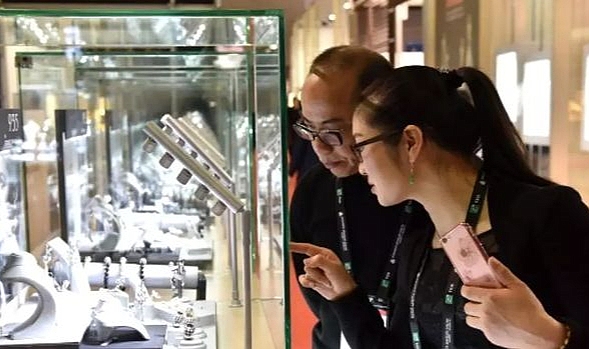
Turkey has gained significant momentum in recent years in the export of jewelry made from precious metals, becoming one of the leading countries in the global jewelry industry.
Ranked among the top 10 countries in global gold jewelry production, Turkey is steadily progressing toward becoming one of the largest production centers in the sector. Looking at the past two years, jewelry and precious stone exports reached 13.6 billion dollars in 2023. The United Arab Emirates ranked first among the main export markets, followed by Iraq, the United States, Hong Kong, and Switzerland.
When evaluating the position of the jewelry sector in 2025, it is necessary to consider whether the industry has advanced or fallen behind compared to 2023, and what gains have been achieved in the process.
Design and branding play a key role in the sector’s development. In highly competitive global markets, original designs and strong brand identities differentiate products from their rivals and enhance customer loyalty. Large-scale companies, benefiting from economies of scale, reduce production costs and increase profitability.
However, for small-scale companies without branding, creating their own brand, adding value to their products, and reaching consumers directly are of great importance. In this respect, investing in branding processes is a critical step for small businesses to achieve long-term sustainability.
Considering Turkey’s industrial structure, if we take 2023 as the starting point, large-scale enterprises accounted for 52.6% of total turnover, while their contribution to production value was 58.4%—significantly higher than that of SMEs. This clearly demonstrates that as scale increases, so do productivity and added value. As for 2025, we leave it to our readers to evaluate the progress of the jewelry industry.
The jewelry sector, with its high value-added structure, is one of the fields where design and branding are most prominent. Personalized designs, high-quality craftsmanship, and aesthetic details create both emotional and visual value for customers.
Large companies, thanks to their strong financial structures, can allocate more resources to R&D and design investments, developing innovative products. Compared to small firms, they also enjoy competitive advantages through larger marketing budgets and global distribution networks.
Among Turkey’s strategies to strengthen its competitiveness in this field, the Turquality program and KOSGEB supports stand out. Turquality provides financial support to companies with branding potential, helping them become global brands in international markets. KOSGEB, on the other hand, offers design and production support to entrepreneurs, enabling SMEs to expand their scale. Thanks to these supports, brands can deliver more unique and higher-quality products while transitioning to more efficient production processes.
In conclusion, Turkey’s jewelry sector, with its increasing export volume, strong production infrastructure, and design-oriented approach, is becoming an increasingly important player in global markets. Supported by branding, design, and government incentives, the industry is expected to secure an even stronger position in the international arena in the coming years.